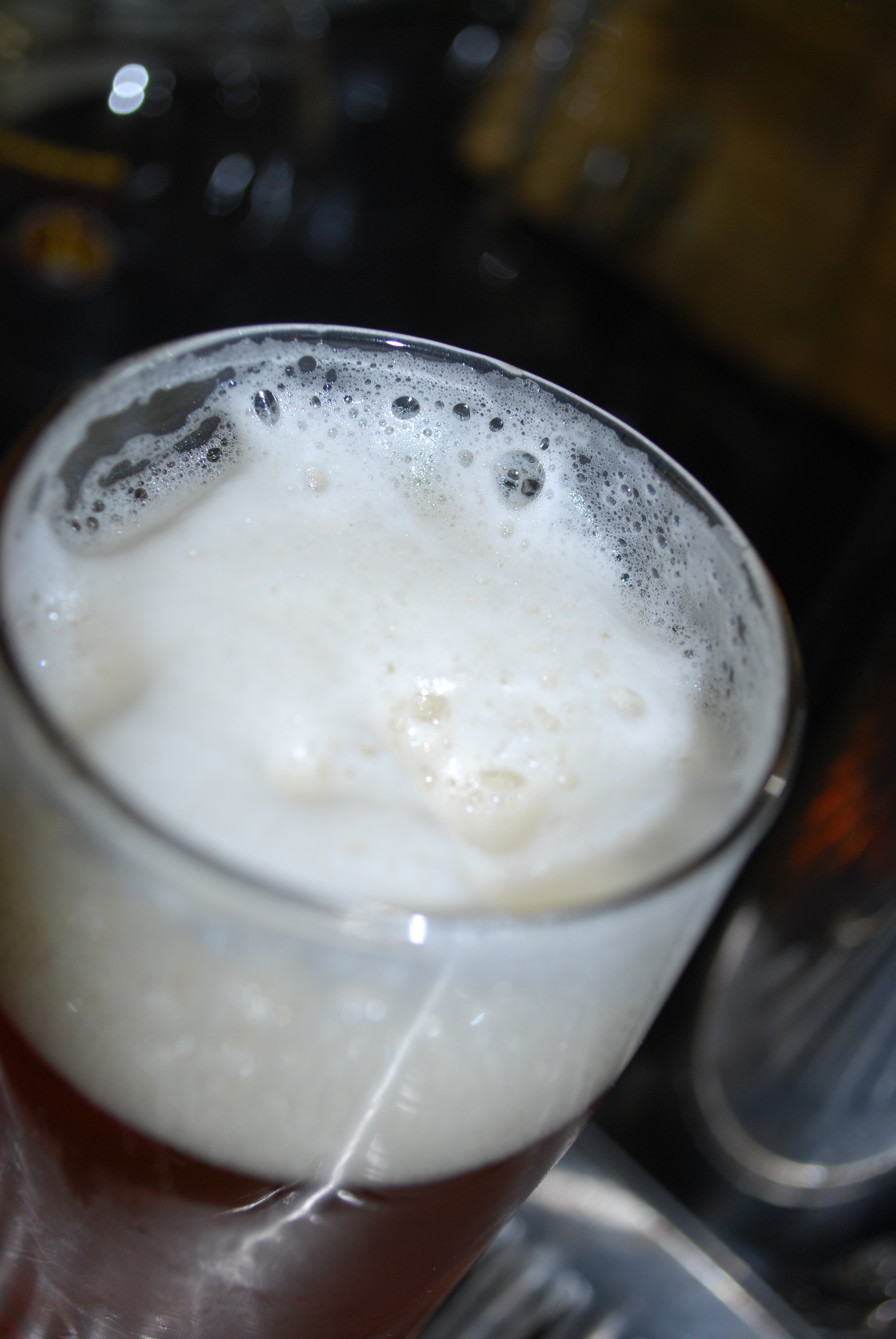
Point: when it comes to good beer, freshness counts for a lot.
Counterpoint: most homebrewers (myself included) “release” their beer before its peak. Continue reading
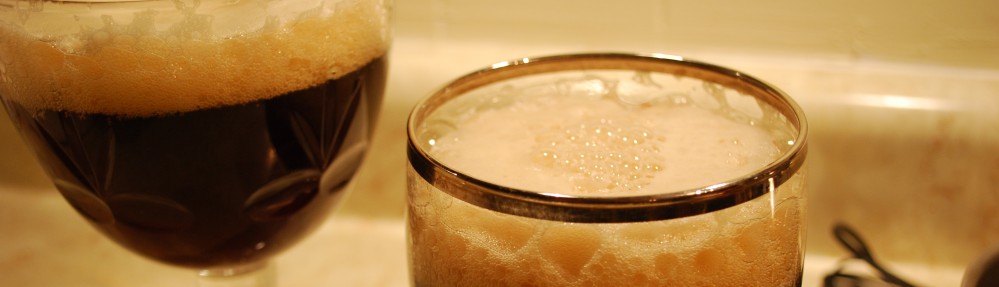
Point: when it comes to good beer, freshness counts for a lot.
Counterpoint: most homebrewers (myself included) “release” their beer before its peak. Continue reading
Time spent beer-touring in Portland, Denver, and Cali has me pumped for the flowering of brewery taprooms now happening in the Twin Cities. Freshness counts in a large way, and at times the three-tier system can seem like showering with a raincoat – being able to talk to brewery staff about the beer you ordered while they’re hand-pumping it from a firkin just for you adds to the appreciation and immediacy of the product in a way that ordering the same beer at a civilian bar or restaurant just can’t; the ambience of a well-considered taproom is icing on the cake.
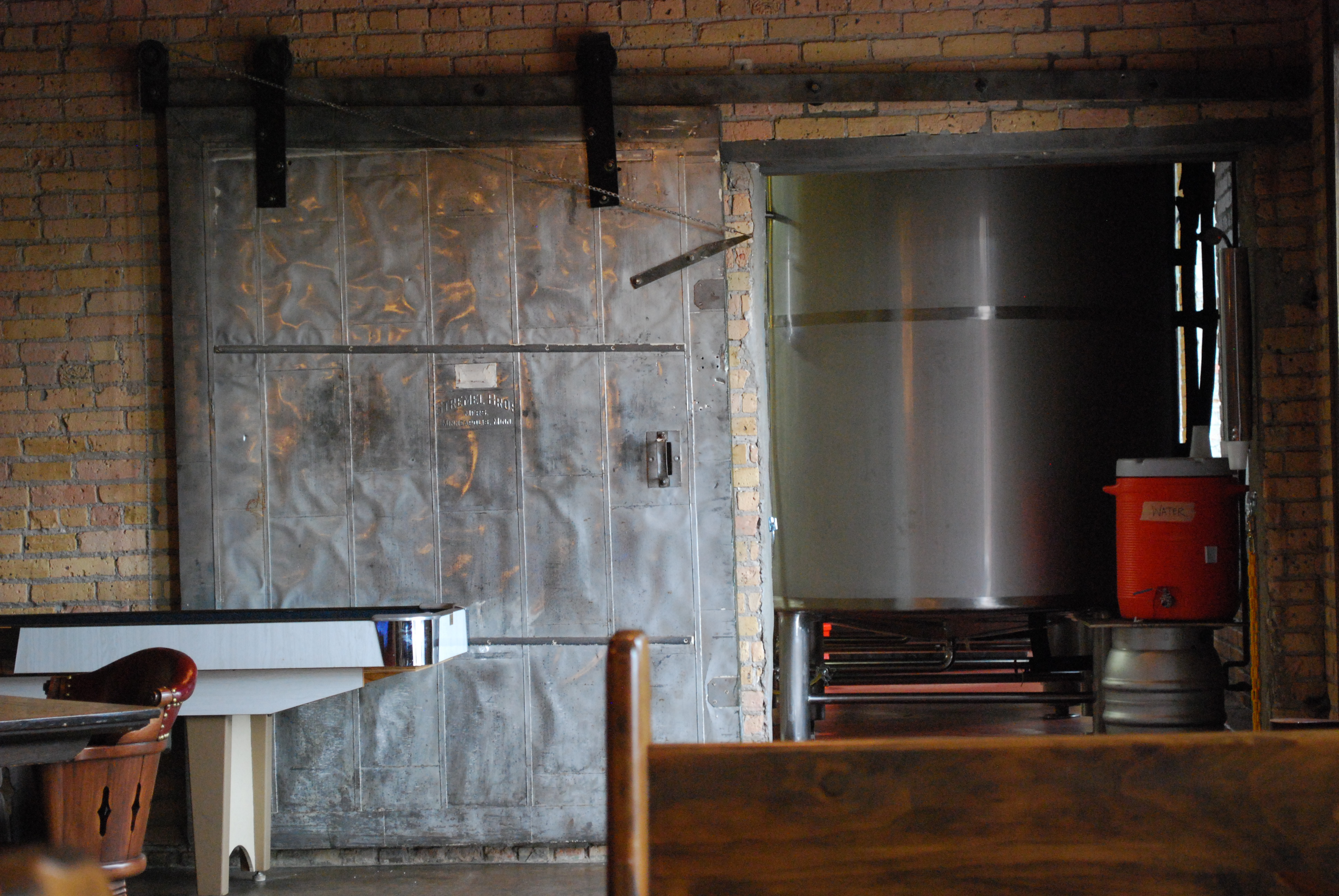
One afternoon this past week found me at one of our newer spots and chatting with a friend over beers before an impromptu walkthrough of the production side, then on with our respective evenings. Always nice to have more cool places to hang out, and who can say no to a food truck after some good beer?
One of the great things about a fiber-rich diet is that it affords daddy some quality reading time in his special office, and this morning some muesli induced me to finally start digging in to Mitch Steele’s IPA (that’s an acronym for something, but I’m not far enough along in the book) and came across this nugget regarding (probable) brewing practices for the nascent style in the 18th century:
Hops were added during the boil and were often only allowed to boil for 30 minutes before being pulled out and replaced with another charge. It is cited in many brewing texts of the period that brewers believed that boiling hops for more than 30 minutes extracted rough and harsh flavors and bitterness.
Kind of a philosophical antecedent to the whole late-addition and hopbursting approach – not directly analogous and probably with not quite the same results in the kettle, but still predating the 21st century craft brewing “hoppy not bitter” mantra by a good 250 years. Nothing new under the sun.
Also:
Occasionally hair sieves were used to strain the hops from the wort.
Maybe there’s a market for follicle-based hop-separation technology in modern home- and craft brewing? Somebody try that out, let me know how it goes.
Hey, if it’s GABF weekend that must mean I’m at home, by myself. Screw it, I’m brewing.
Porter’s been on my mind lately, since my buddy Greg and I have been extolling its virtues as the temperature drops and darkness comes a little earlier each night. Given those parameters, one of the beautiful things about living in Minnesota is that porter season lasts about 9 months. Continue reading
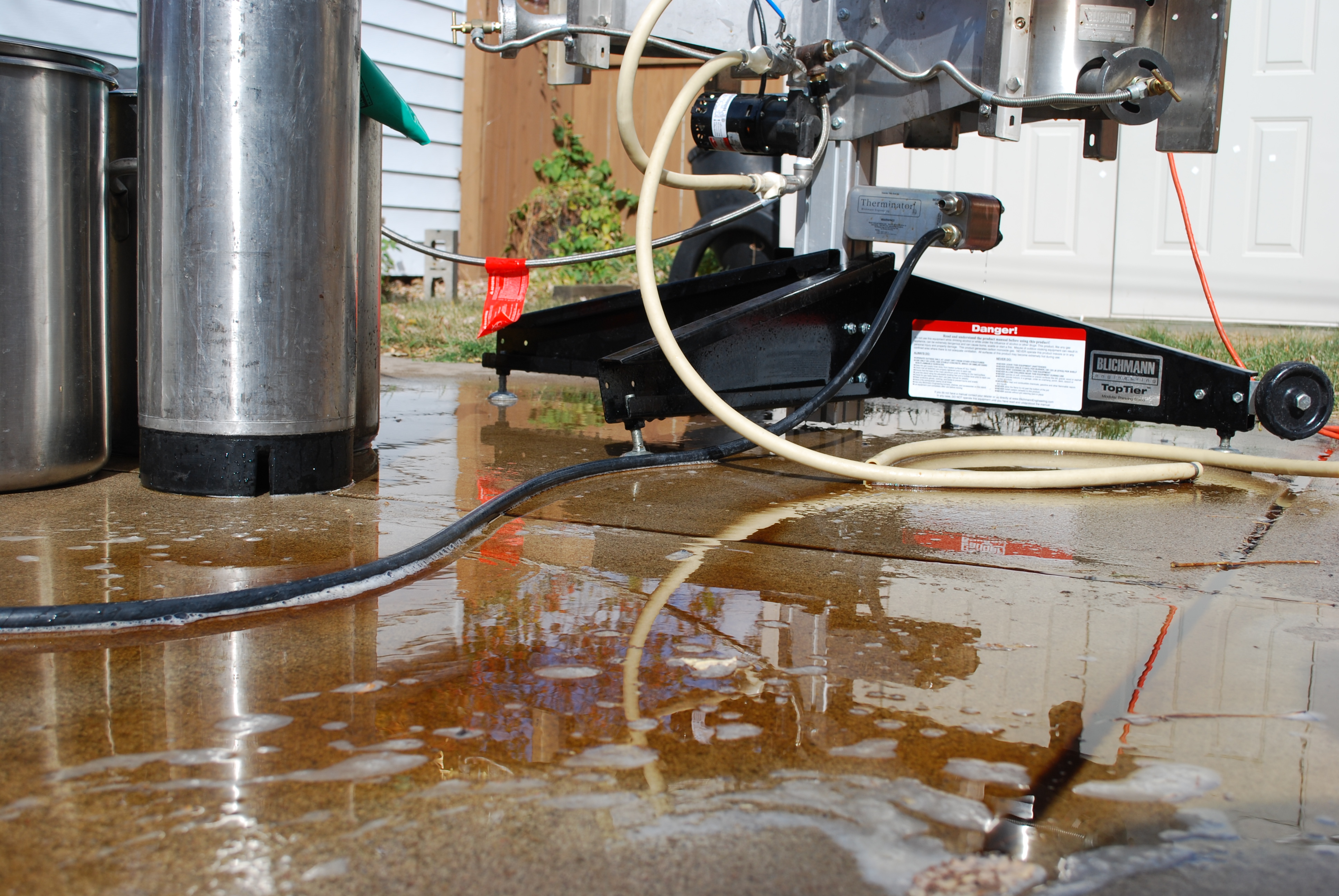
Sour postponed – porter needed. Notes to follow. I gotta go clean all this stuff.
From a doubleheader brew session back in August – drinking the batches now. Cheers!

image courtesy mnbeer.com
About the time that the first pictures of fall steelhead get posted to social media sites, the year’s first wet-hopped beers start hitting the shelves. And, just a few days ahead of this natural phenomenon, I had my first pint of 2012 Wet.
While yammering on as part of a Better Beer Society panel on sour beers last week, I got to sit next to Spencer from Surly Brewing. Spencer told me in no uncertain terms that my obligation to the universe was to have some of this year’s Wet – Simcoe had returned, he said, from front to back, and (now I’m going to paraphrase almost 100%) that the hop profile was less “bam!” and more “whoa” than last year’s Columbus-forward version, and (now I’m done paraphrasing) that it was not to be missed.
After getting my arm twisted like that, I had a pint (on tap at the Republic, at least as of last Wednesday, citizens), and its sticky, piney dankness did not disappoint. I am haunted by dankness.
What fresh-hop beers have you had (or brewed) so far this season? Any standouts?
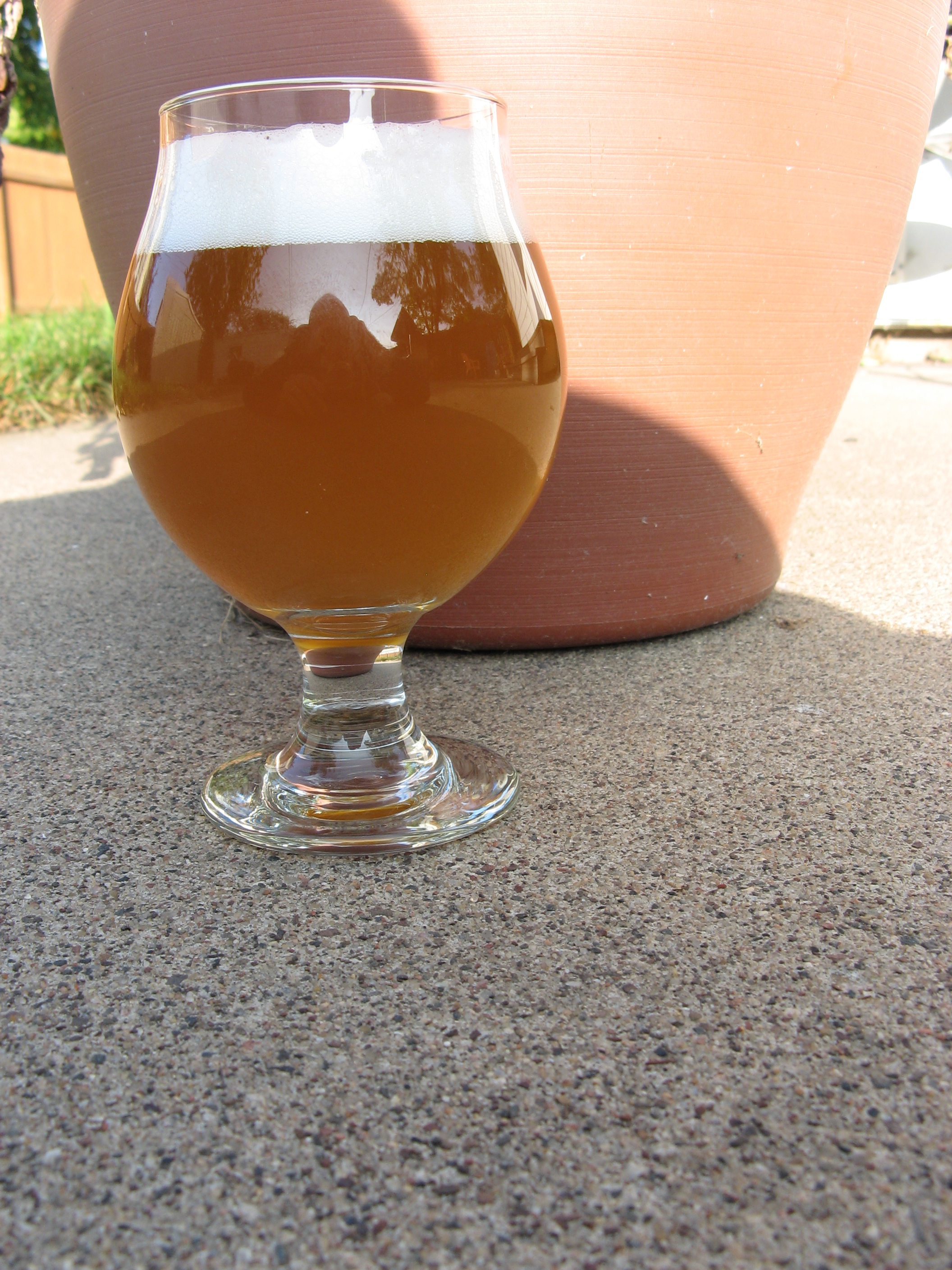 It’s a couple days past the solstice and it’s not the time of year I think most folks usually scramble for a snifter of saison … plus, I generally don’t hold truck with spices in my saisons. I love process-derived and yeast-derived complexity.
But this was an Urban Farmhouse Ale, using the ingredients of the season (homegrown hops and coriander from a plant I had let go to seed in the garden) from my pied a terre. Spice embargo be damned, and also the time of year – it’s never not a good time for a saison.
An agrarian admixture of mostly pils malt backed by a touch of Canadian pale and German Vienna, flecks of unmalted oats in the grist. Low, low mash rest for high, high fermentability, a bit of kettle sugar, then a long, hot primary with East Coast Yeast #08 Saison Brasserie Blend.
How did it turn out? Here we go:
Poured off a keg at about 7 weeks from brew day. Hazy straw and a Luciano Pavarotti’s finger-worth of white mousse. The nose is initial musty notes of cellar and cork followed quick with a yellow lemon Froot-Loop snort of coriander. More coriander in the flavor around a flash-bang of grassy, spicy Liberty hops (a flameout addition to the kettle along with coriander). The yeast comes through with a curious mix of powerful ripe tropical fruit esters and phenolic black peppercorn. Some oat-derived oiliness fools your palate into thinking the finish will be something other than blastingly dry (FG 1.001!)
So – it’s light, snappy, and I wish I had had this during the heat wave in July. But, as I said, it’s never a bad time for a saison, and as Garret Oliver writes, it’s an extremely food-friendly style. And with all the food-centric holidays coming up, that’s good enough for this farmhouse aficionado.
This was my first time out with ECY08, and I like it … maybe not love it. The mixture of ripe fruit and phenols certainly holds my interest, but I have to wonder if this beer would be improved if it broke one way or the other. I would try this recipe again but perhaps with a different saison yeast (Wyeast 3711? yeah, Wyeast 3711), or with the same strain but different fermentation schedule. My notes say that the primary free rose to over 80F (fermometer on the carboys didn’t go that high) and that at 12 hours the offgas was “spicy – lemongrass and white pepper – but not phenolic.”
Anybody else use ECY08? What were your results? Where do you come down on spiced saison?
Sitting over coffee and prepping notes for a talk on sour beers for Better Beer Society University, I have mixed-culture fermentations on the brain and some raw materials to work with.
Raw material #1: Last summer I racked a nice, clean red ale base beer into an oak barrel and inoculated it with Wyeast’s Roeselare blend; 13 months on, it’s ready for … something. Cherries? Blending? Straight-up bottling? Whatever its fate, I need some fresh wort to fill that buggy barrel no matter what.
Raw material #2: Earlier this year a Brewing TV viewer provided some friends and I with a washed Brett culture from a bottle of Russian River Sanctification. So I got that going for me, which is nice.
Raw material #3: a couple pounds of frozen-ass Chernaya Lisovenko blackcurrants from Mary Dirtyface Farm. So I got that going for me, which is nice.
All this can only mean one thing: it’s about to get acidic up in this piece.
The plan: 10 gallons of base beer, split half and half between the to-be-emptied barrel and the Sanctification Brett and the blackcurrants (Russian River, Russian fruit – I love symmetry). Do something cool with the 2011 ale from the oak … I’d tell you now, but then I’d have to get you blackout drunk so you wouldn’t remember.
Recipe deets below, brew day to follow. Stay tuned.
Basecamp Sour 2012
Targets: OG 1.052, 7 SRM, 18 IBU
Grist
Simple is good …
Mash: Flemish Sour regimen
… but complex is sometimes necessary. A high-temp alpha sacch’ rest will create plenty dextrin for the Brett to chomp on. Truth in advertising: I’m using up a stock of shamefully old undermodified Pils malt with this mash, elsewise the lack of unmalted adjunct grain would arguably make the 122F rest unnecessary for what these beers are going to be.
Boil
Fermentation
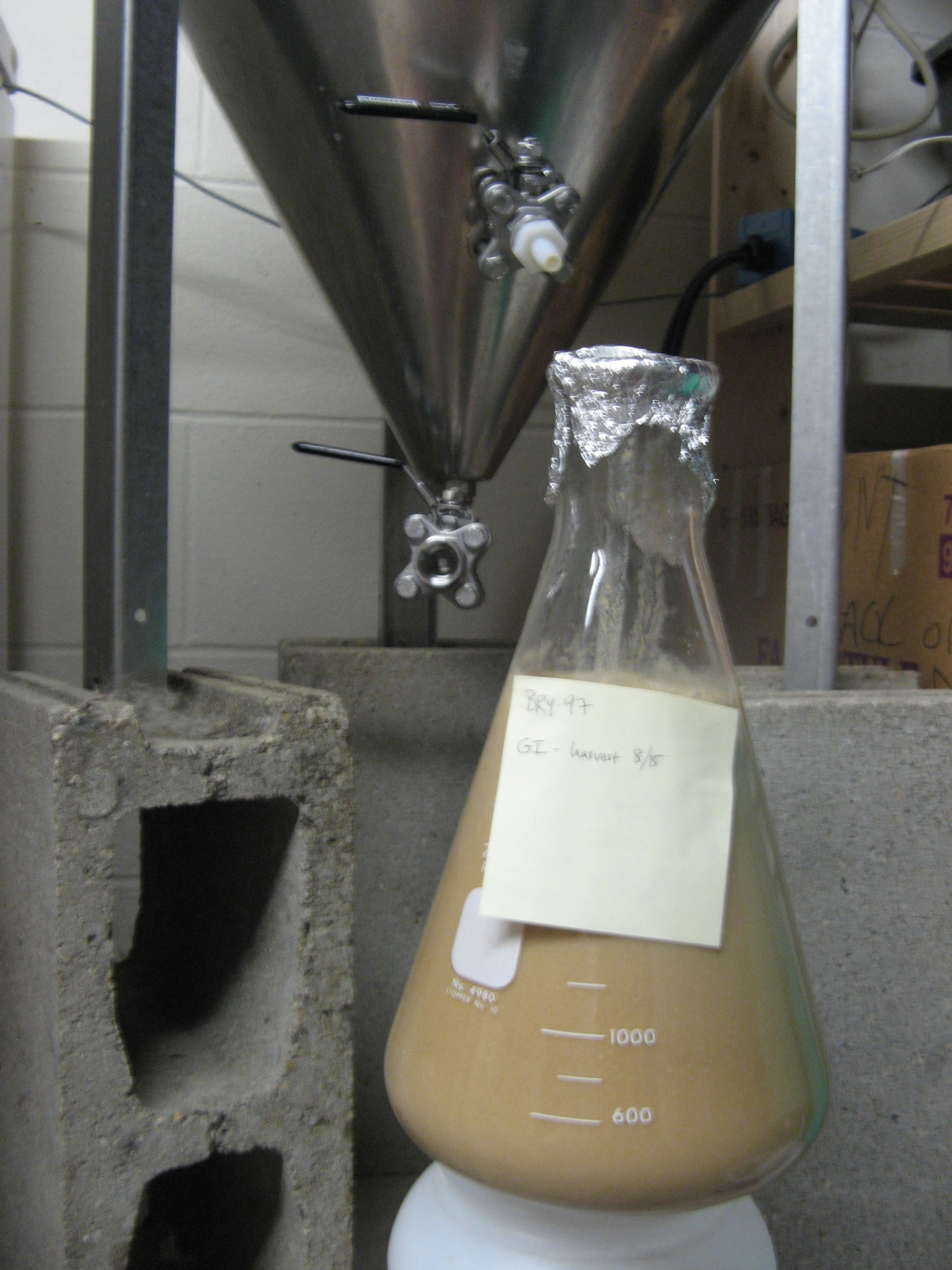
 the beer engine